
Why Waldorf

A Place Where Your Child will be Truly Known
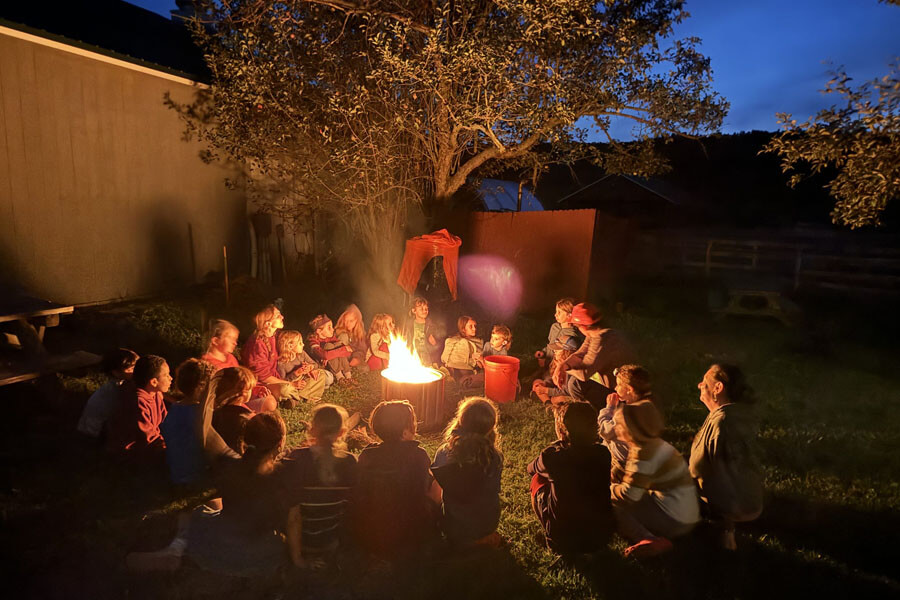
Parents want their children in a warm and nurturing environment where their child is truly known. One of the underlying values of Waldorf Education is that our humanity is built on and dependent upon relationships. Waldorf schools are uniquely positioned to provide sustained connection and learning, even during times of uncertainty. Our private elementary and middle school accomplishes this through a great deal of flexibility, creativity, and caring. Our play-based preschool and day summer camps help them to further build important motor and social skills.
Strengths of the Waldorf Pedagogy for Our Time
Experiential Learning
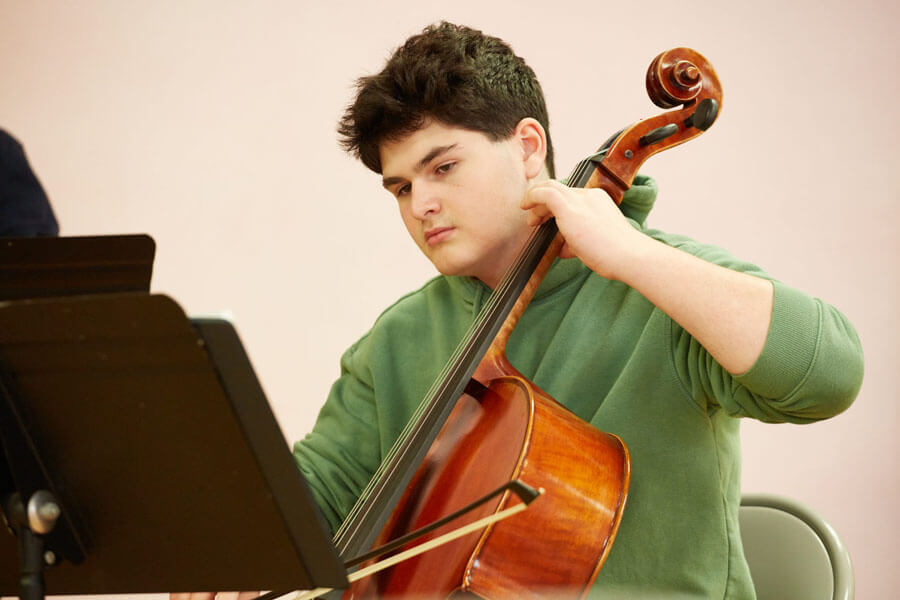
Project-based learning is a tenet of Waldorf Education. Cornerstones of the Waldorf approach include: teaching through the arts; working from experience to concept; use of rhythm and repetition; teaching from the whole to parts. Our teachers create lessons to meet and support student engagement.
Early childhood students build an early literacy foundation through listening to stories with rich language and learning songs and poems. They gain early numeracy through practical activities such as counting how many classmates are present when setting the table, or counting when finger knitting or jumping rope.
Teacher-Student Relationship
Multi-year relationships: In our mixed-aged kindergartens, a student might work with the same teacher for up to four years. In the grade school, the class teacher generally stays with a class for multiple years. For the teacher, this means time to really get to know the children and help their gifts unfold. For the students, this relationship offers stability and guidance. The Waldorf curriculum is integrated to correspond to the child’s developmental stage; each year’s curriculum builds organically on the previous year, creating an arc of learning which is enhanced by the continuing presence of the teacher.
Small class size: Our smaller class size lends itself to more personal attention from teachers.
Learning without Standardized Testing
Our students are eager to learn for the sake of learning rather than focusing on studying for tests. Our teachers rely on observation and their relationship to the student as the foundation for assessment.
When deciding which school will provide the best educational fit for your child, we suggest you start by imagining the characteristics you hope your child will possess as an adult. What types of skills will help them best succeed? What moral characteristics are most important to you? Do you want your child to:
- be flexible and adapt to a changing world;
- recognize the value in all persons and the natural world;
- treat all with respect;
- be comfortable in his or her body and move with strength, coordination, and confidence;
- have a creative and discerning mind;
- be able to solve problems and explain the process?
The families in our supportive, vibrant community all share a desire to provide their children with an education that will make a lasting difference in their lives. From preschool through elementary and middle school our students travel from fairy tales to Shakespeare, from dreamy watercolor painting to the precision and exactness of geometry, from the wonder of nature to botany, chemistry, physics, and physiology. Academic achievements are entwined with an ever-increasing self and social awareness as our students’ capacities unfold and are encouraged in a developmentally appropriate manner, in a safe and reverent environment. Choose HVWS if you seek the best educational fit for your child.
To learn more about our curriculum, we welcome you to connect with us. As a private elementary and private middle school, Housatonic Valley Waldorf School serves families from Newtown, Bethel, and Danbury in Connecticut, as well as Westchester County, New York.

“The one really poignant comment Becky [an alumna] made was when she said she was so surprised upon entering high school to see that all the subjects were separated (not integrated). And, of course, I learned it the opposite. I had no idea History had anything to do with Science. I had never thought of it any other way.”